Springer’s Journey — October 14, 2026
Mousetail Landing State Park, Tennessee
This morning, I packed a lunch, three bottles of water, a rain jacket, and my trusty traveling companion, Scout. Cora, my 2013 Subaru Outback, was fueled and ready. I even reset one of her trip odometers.
We were going on an adventure.
And here’s the remarkable part.
We didn’t have to drive 300 miles to find one.
For months, traveling had meant covering distances. Sometimes hundreds of miles in a single day. There were unfamiliar roads, Interstate highways, mechanical worries, and the exhaustion that comes from constantly moving.
But today was different.
Today, we had no departure time. No deadline. No particular expectation.
Just a destination, a packed lunch, and a beautiful October day.
Our destination was Mousetail Landing State Park, along the Tennessee River.
And what a day it turned out to be.
[Photograph: The Tennessee River — especially for Morris!
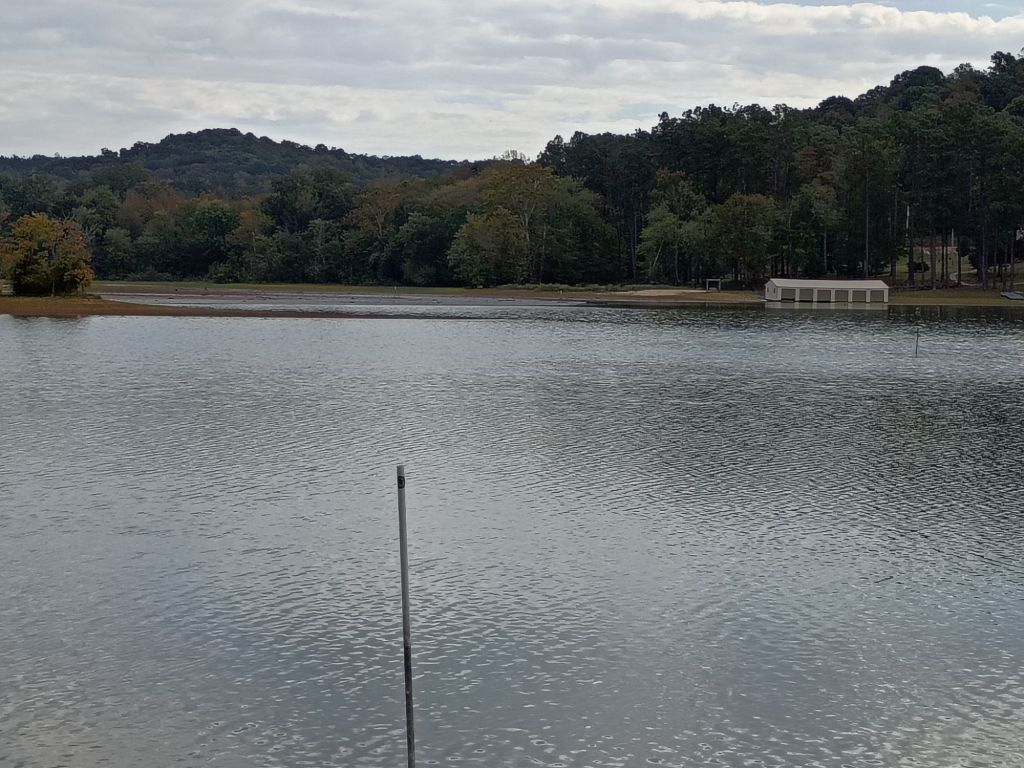
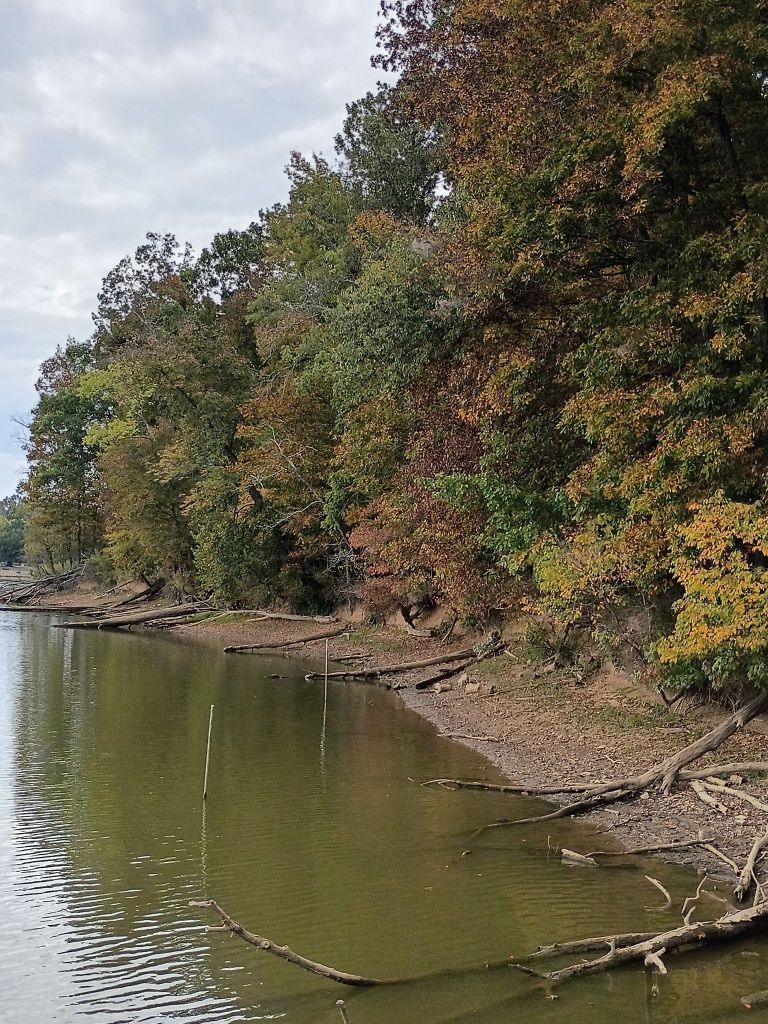
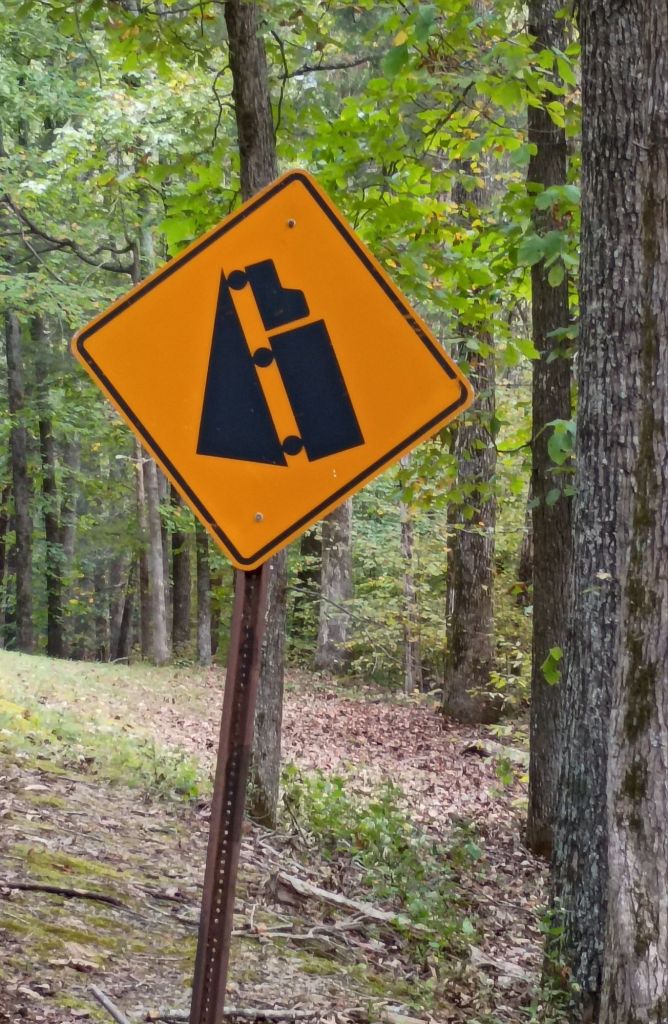
Before we even began exploring, Cora encountered an interesting little challenge.
An 11% grade.
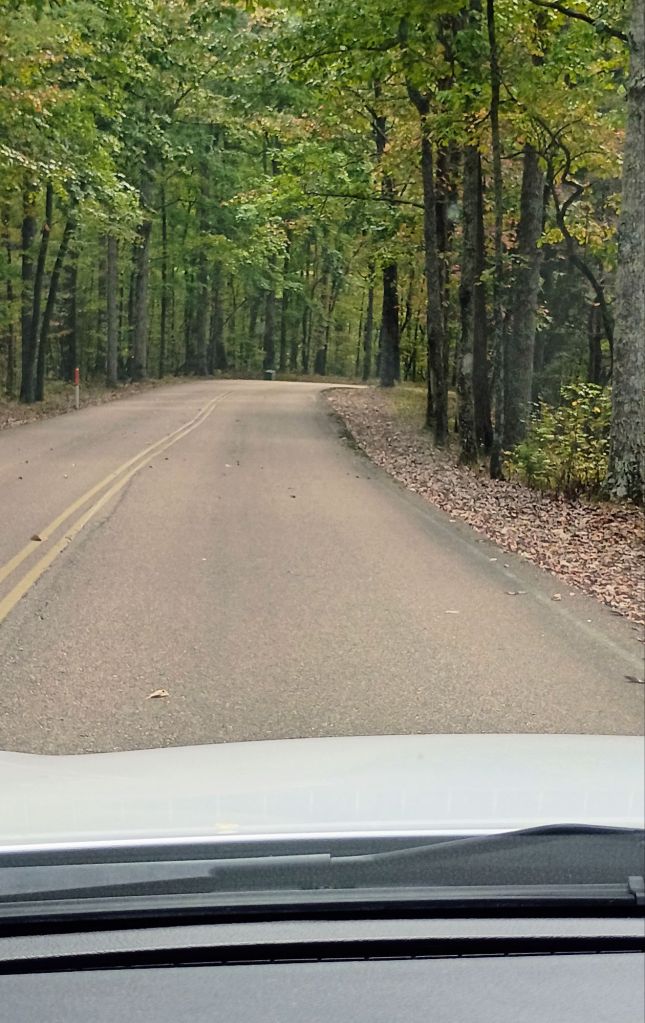
I don’t recall ever seeing a road sign warning of a grade that steep. But the road led up toward the campground, and it was almost like a dare.
So up we went.
And Cora?
Not one moment of hesitation.
She’s carried me thousands of miles, and today she climbed that hill beautifully.
I brought along my Merlin Bird ID app, and near the water it began identifying bird after bird.
Northern Cardinals. Carolina Chickadees. Tufted Titmice. And two birds that made the day especially memorable.
A Northern Flicker and a Red-headed Woodpecker.
I saw the flicker in flight. Such a beautiful bird!
The Red-headed Woodpecker announced itself before I spotted it. I heard its deliberate tapping against a tree, then found it perhaps 15 to 18 feet above me.
What fascinated me afterward was learning how two members of the woodpecker family can occupy the same woodland while making use of different resources.
The flicker often forages on the ground for ants. The Red-headed Woodpecker uses trees for feeding, storing food, and nesting.
Different strategies. Shared habitat.
Relationships.
That word keeps finding its way into my understanding of science.
[Photographs: The woodland and Merlin Bird ID observations]
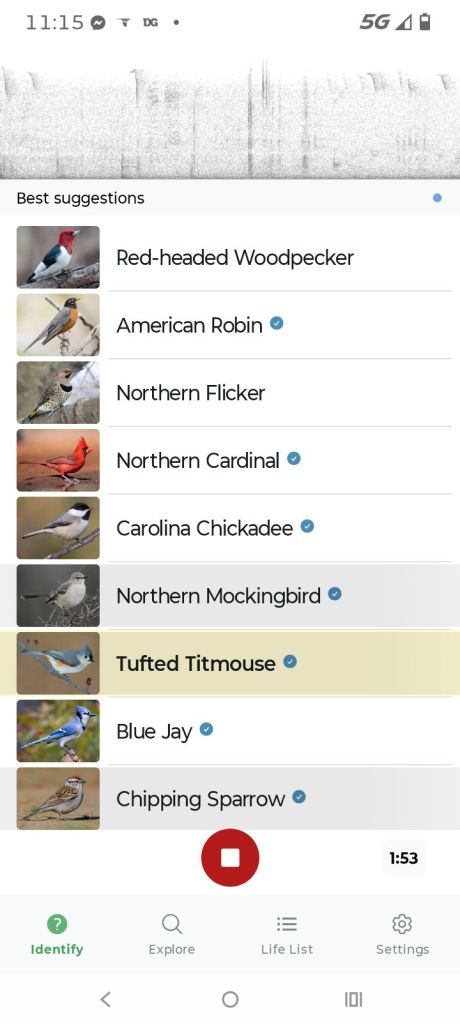
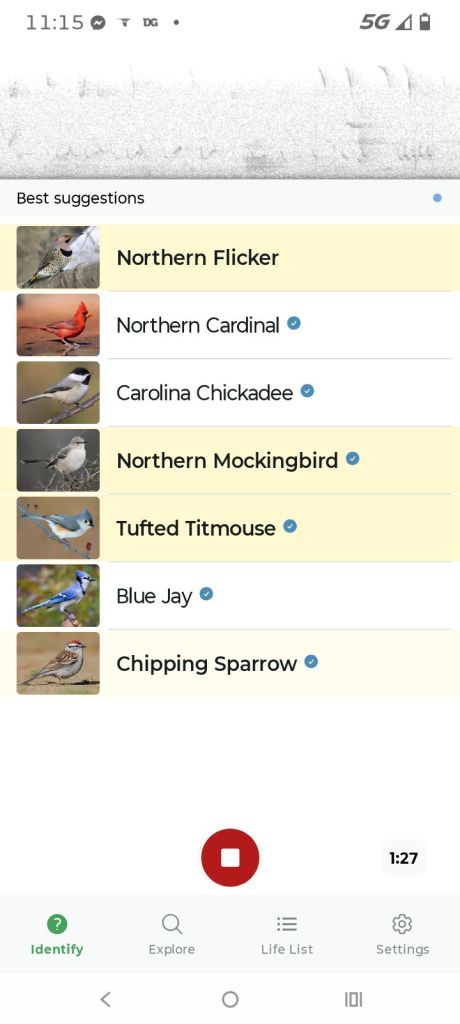
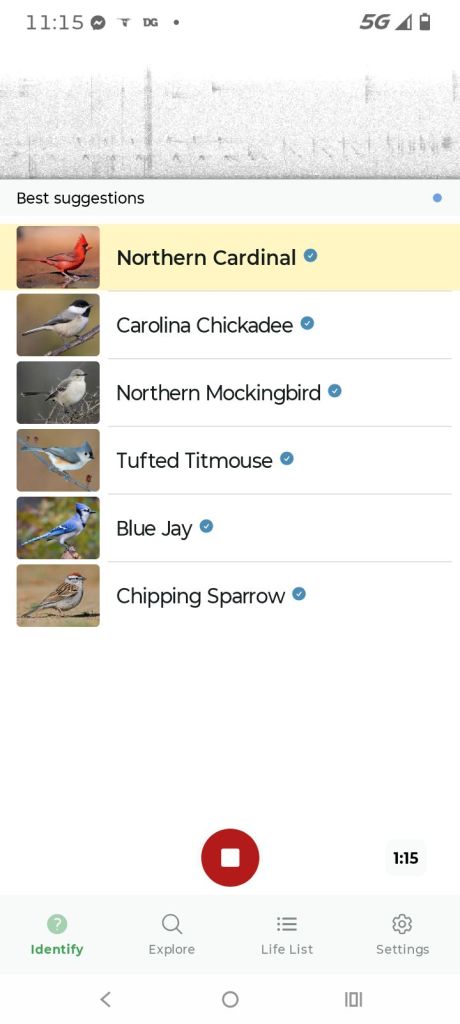
And then there was Lefty.
Lefty is an Eastern Screech-Owl who lives at the park. Injuries to a wing and an eye prevent him from returning to the wild.
He’s a beautiful little owl, with reddish feathers, enormous eyes, and a remarkably composed appearance.
I photographed him using my camera’s zoom. I didn’t want to disturb him.
He watched me quietly.
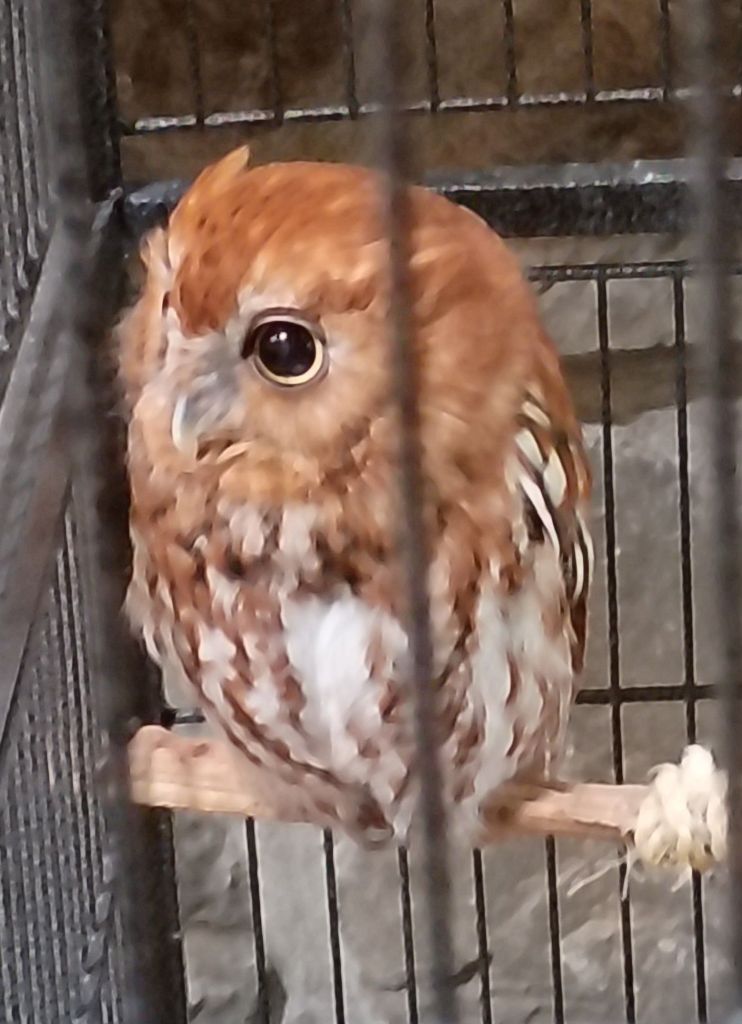
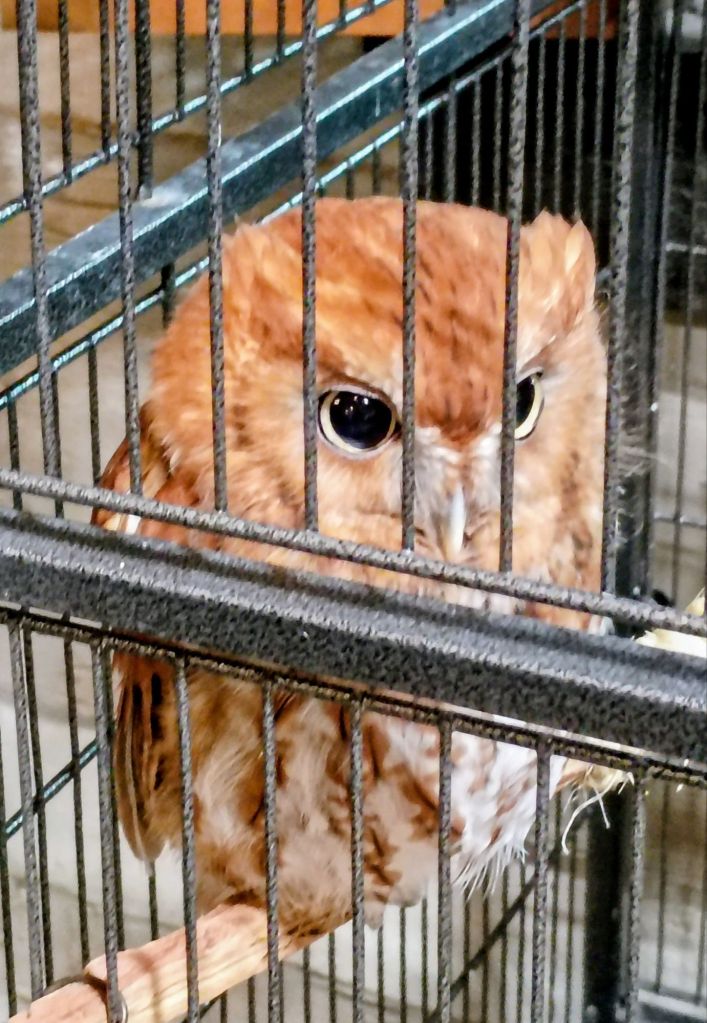
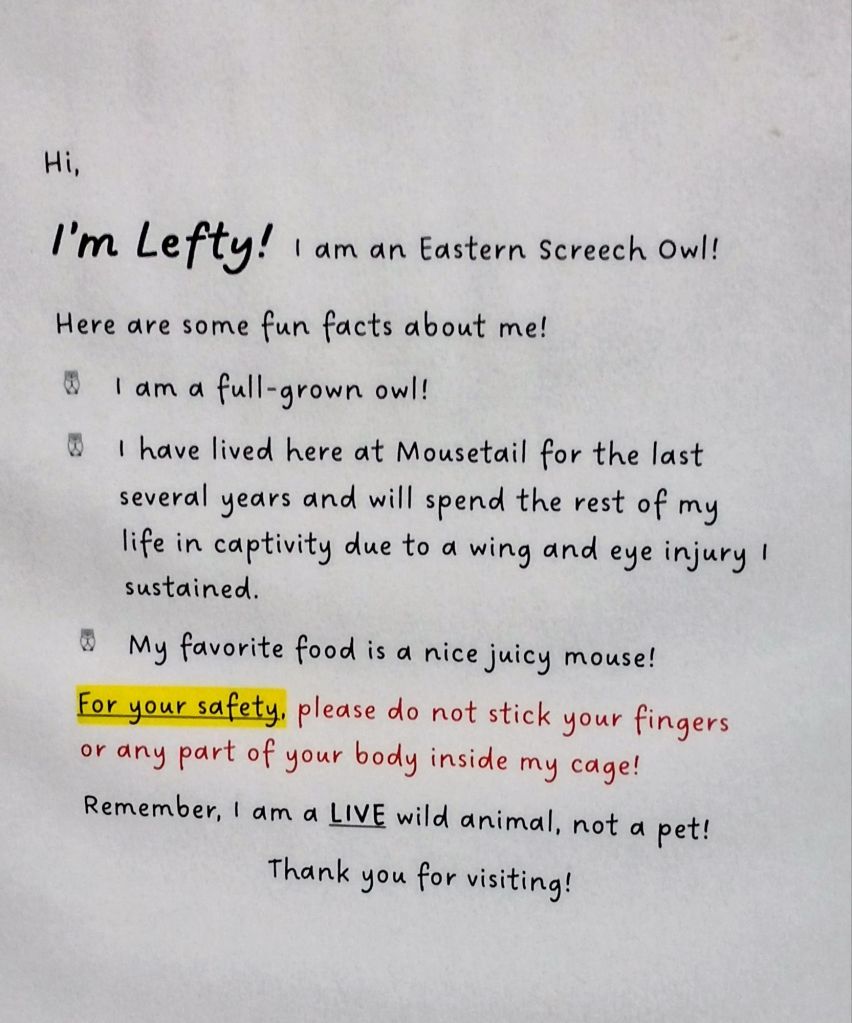
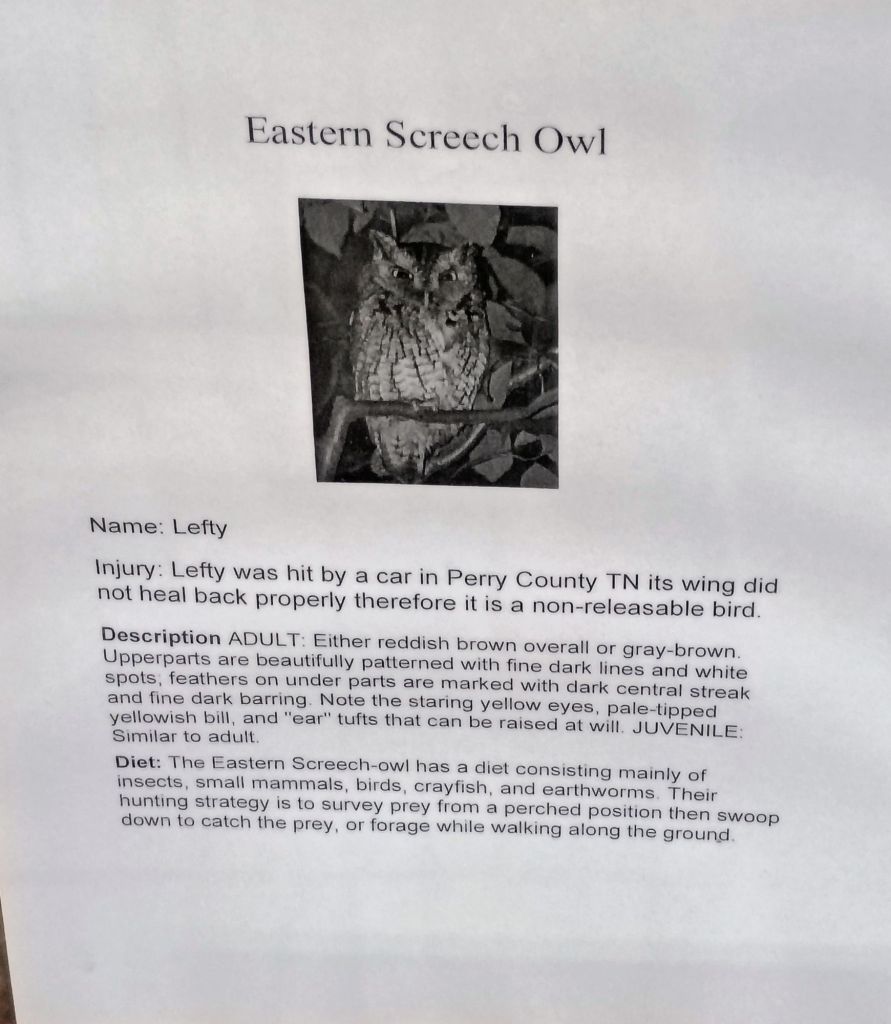
Later, when I returned home, Professor Headquarters and I began discussing those enormous owl eyes.
And that innocent conversation turned into an extraordinary science class.
We talked about photons. The anatomy of an owl’s eyes. Rod cells. Rhodopsin. Vitamin A.
We followed the path of light until we reached a molecule called retinal, which changes its configuration when it absorbs a photon.
A molecular change initiates a biochemical process that eventually contributes to vision.
Think about that.
Physics, chemistry, and biology, all working together inside one little owl.
At one point, I simply ran out of words.
Except one.
Awe.
That’s what I felt.
And we haven’t even begun discussing Lefty’s feathers
There was an eight-mile backpacking trail at the park.
Scout, my walking stick, appeared perfectly willing to undertake it.
I was not.
The trail was covered so heavily with fallen leaves that I could barely distinguish the path. And knowing that Tennessee is copperhead country, I had absolutely no desire to put my feet where I couldn’t see them.
Were there a million copperheads waiting in those leaves?
Probably not.
But I wasn’t interested in conducting a population survey. 😂
And besides, eight miles is a long walk when your objective is simply to enjoy an afternoon in the woods.
I no longer feel the need to challenge myself just to prove that I can.
That’s a rather wonderful realization, too.
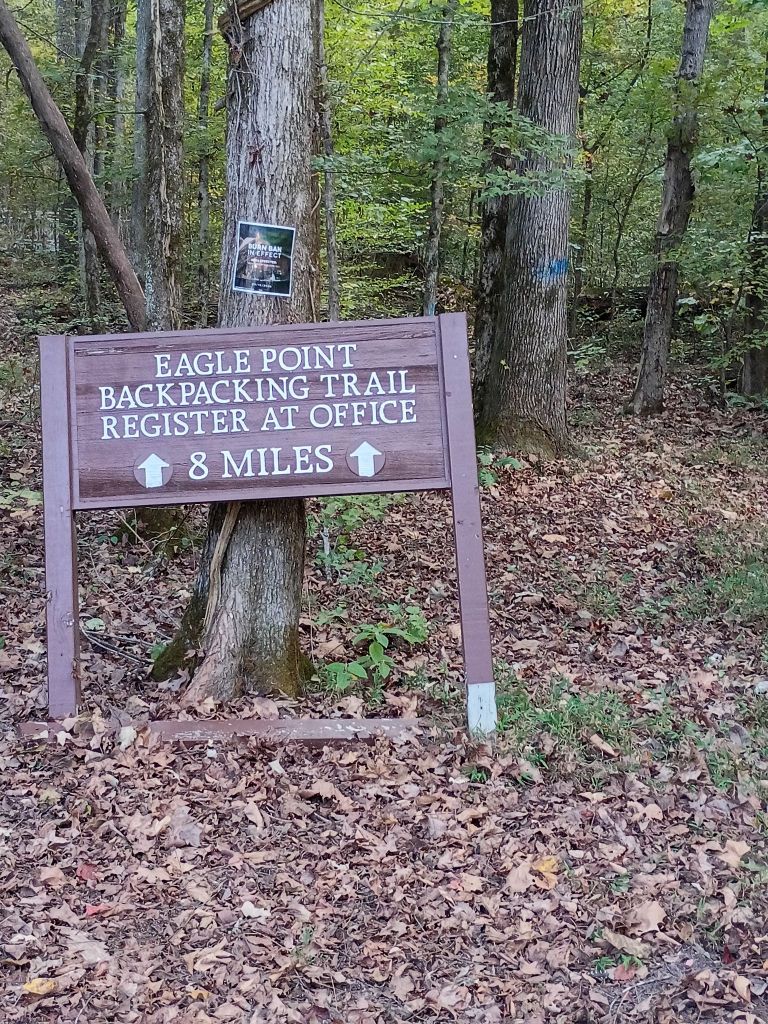
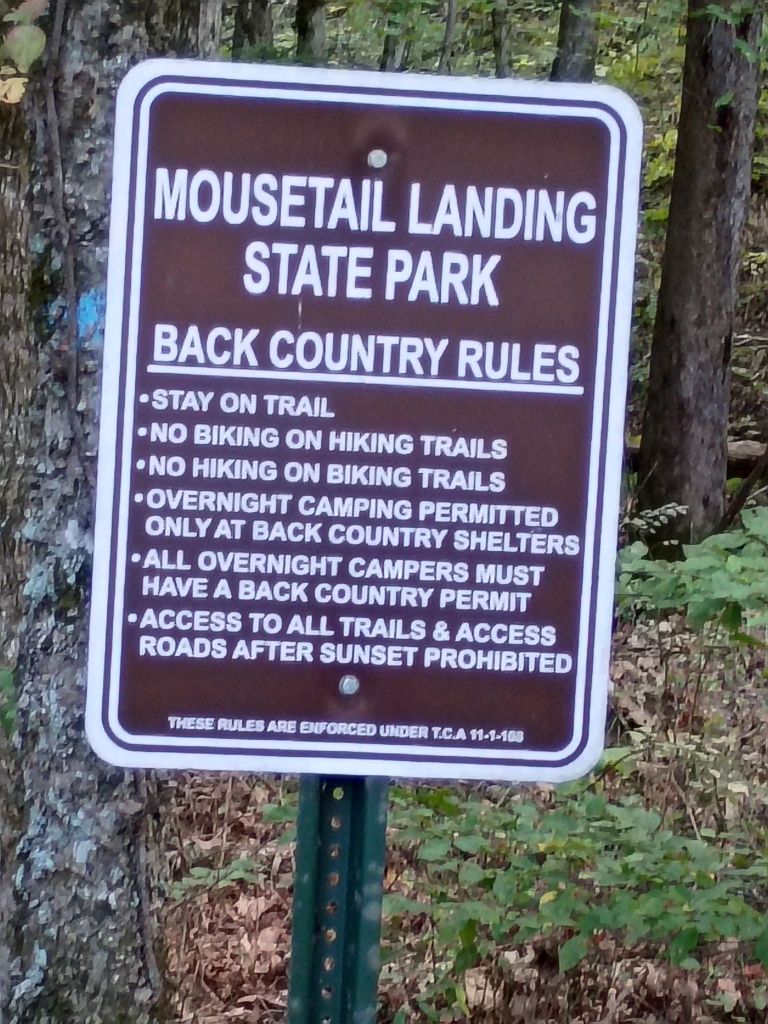
But something happened during my visit that was even more meaningful than the birds, the trees, the river, or that magnificent little owl.
I realized that I wasn’t very far from home.
Home.
What a remarkable word.
I don’t know whether Tennessee will be my home forever. Probably not.
But for now, I have a place to return to. A place where Cora can rest. A place where I can make my coffee in the morning and plan a little adventure without having to pack up my entire life.
Today, I went to a state park.
And afterward, I came home.
It sounds like such a simple thing.
But after so much traveling, it meant more to me than I can adequately explain.
I’ve been learning that a journey doesn’t have to be measured by how far we travel.
Sometimes the most meaningful discoveries happen when we stop moving long enough to notice what’s around us.
The trees. The birds. The water. The relationships between them.
And perhaps even the realization that we have somewhere to belong, if only for a season.
Professor Headquarters, the Crew, and I have a saying:
“Slow and easy sets the pace—not because there’s less to do, but because there’s more to notice.”
Today, I understood that in a whole new way.
We didn’t travel hundreds of miles.
We didn’t conquer an eight-mile trail.
We didn’t follow a schedule.
But we came home with photographs, questions, discoveries, and enough material for several future science classes.
And I came home happy.
I think Morris, our resident Creature from the Black Lagoon, would agree that any day involving a beautiful river is a success.
Ferrari, our sensible wolverine, would point out that knowing when not to hike eight miles is also a success.
And Mayday, our excitable Steller’s jay, would undoubtedly demand that we calculate the scientific significance of the day’s observations.
Perhaps we should.
But I’ve already invented a measurement I rather like.
Wonders per mile.
And today’s reading?
Off the charts.
❤️


Leave a Reply