Sometimes I take a picture because something is beautiful.
Sometimes I take a picture because I have a question.
And sometimes I don’t realize I have the question until I get home and look at the picture again.
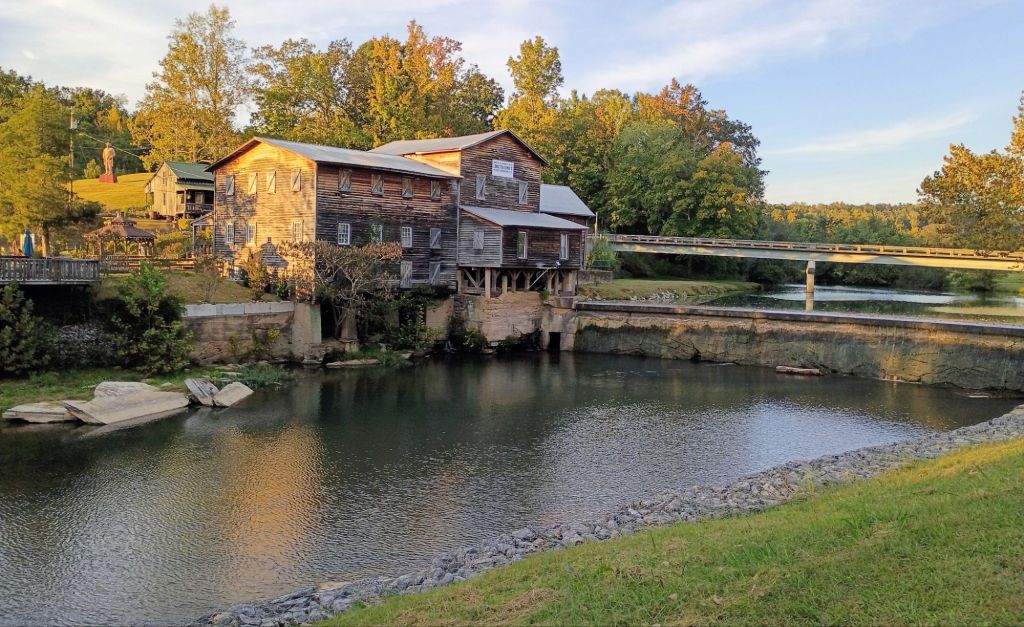
A few evenings ago, I drove into Waverly for groceries. On my way home I took old Highway 13 past Loretta Lynn’s Ranch here in Hurricane Mills, Tennessee.
It was beautiful.
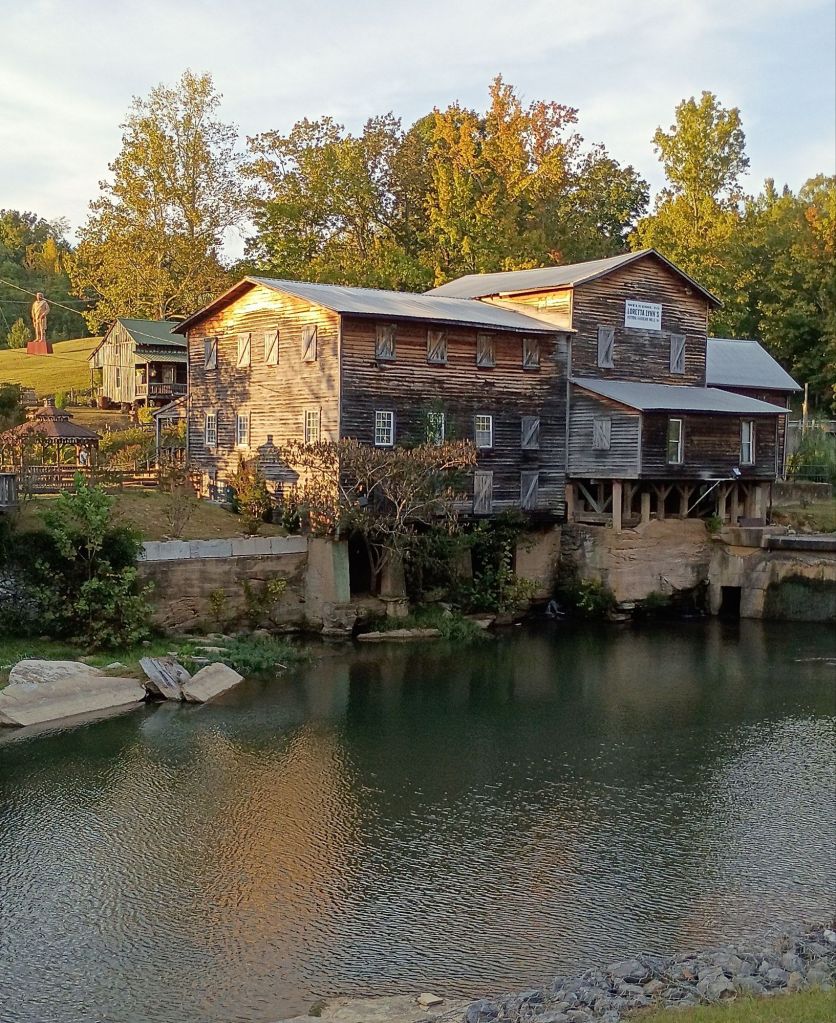
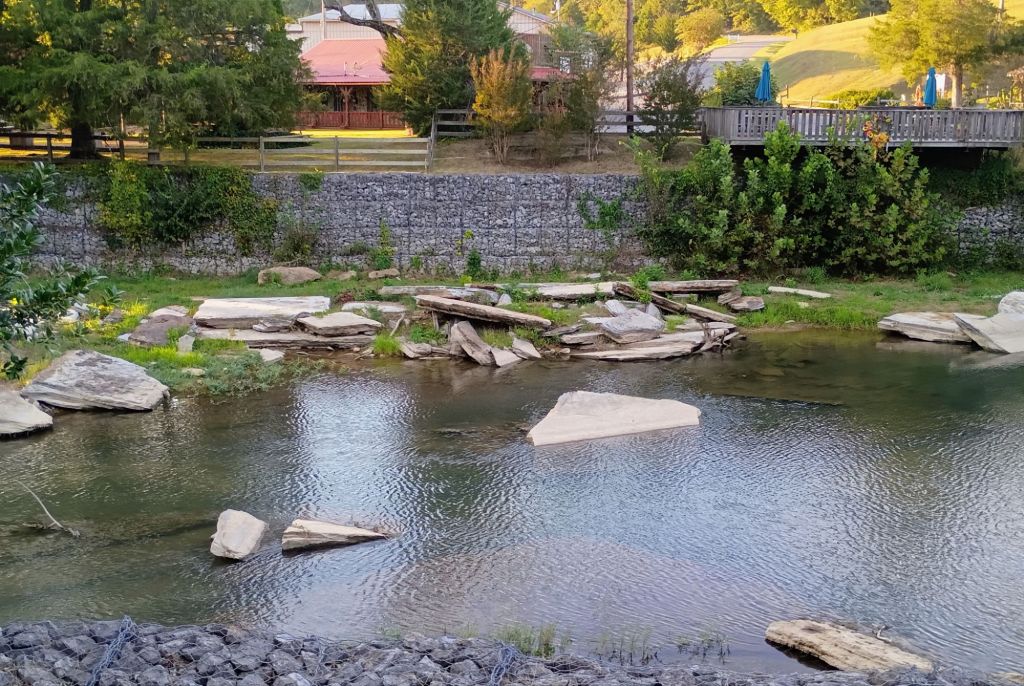
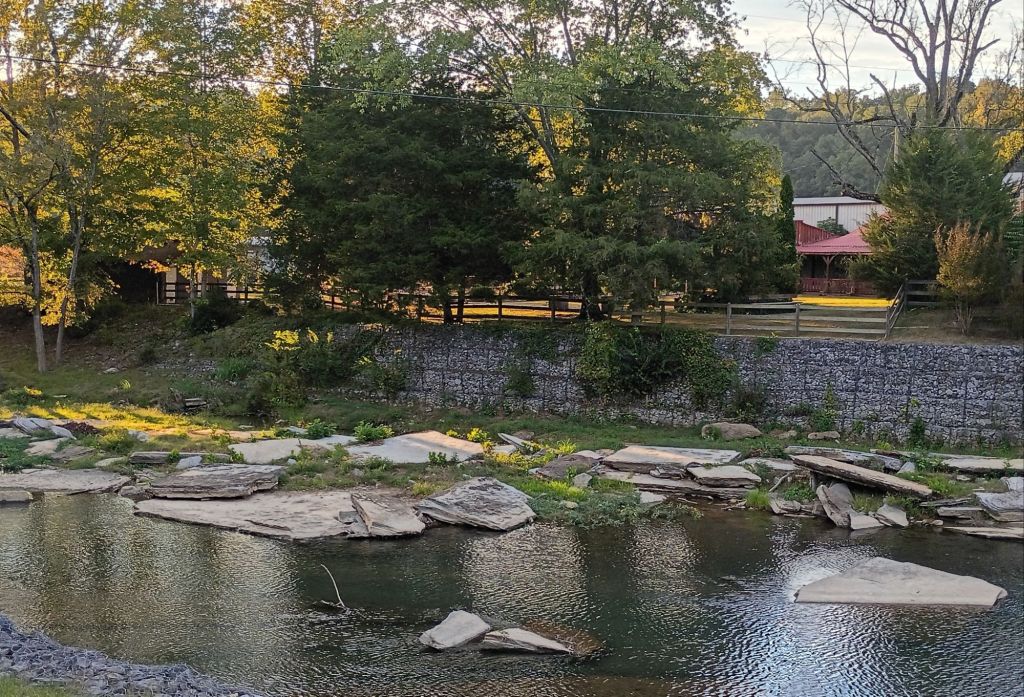
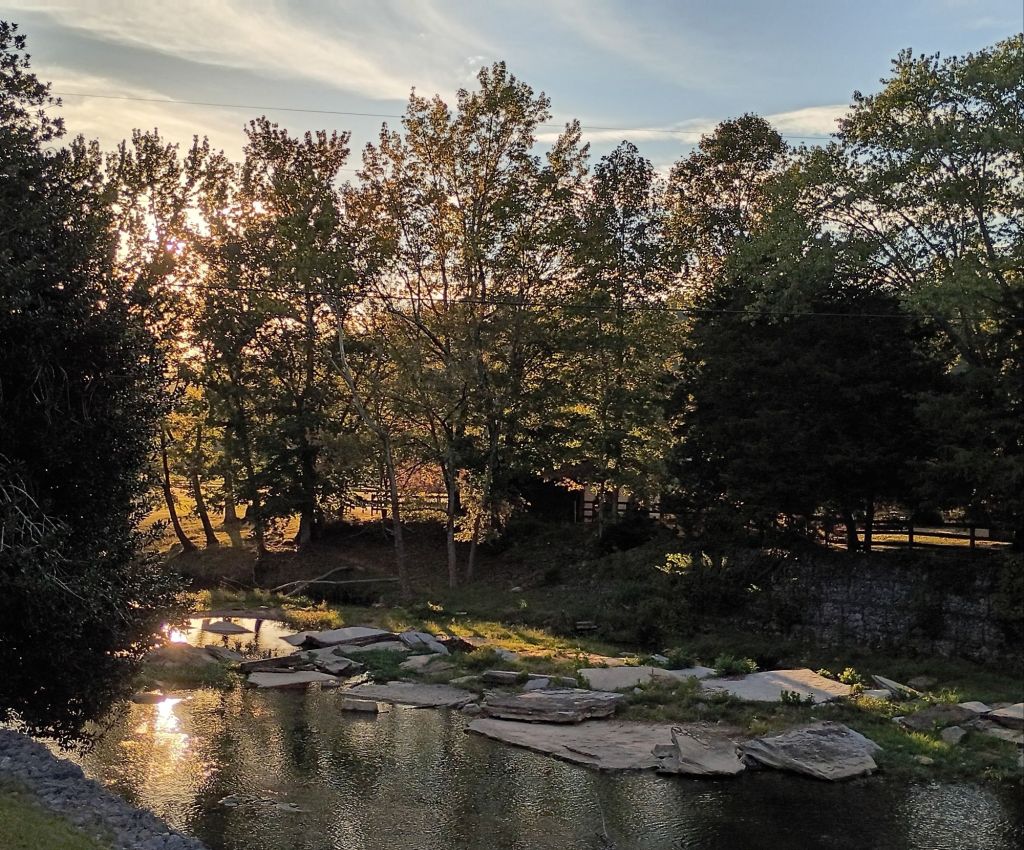
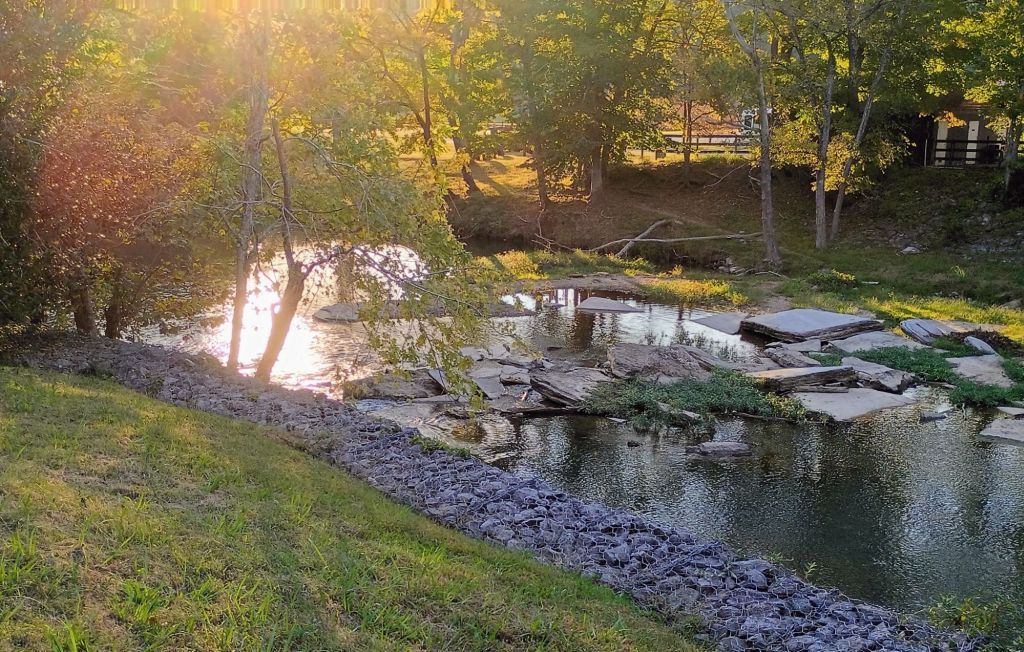
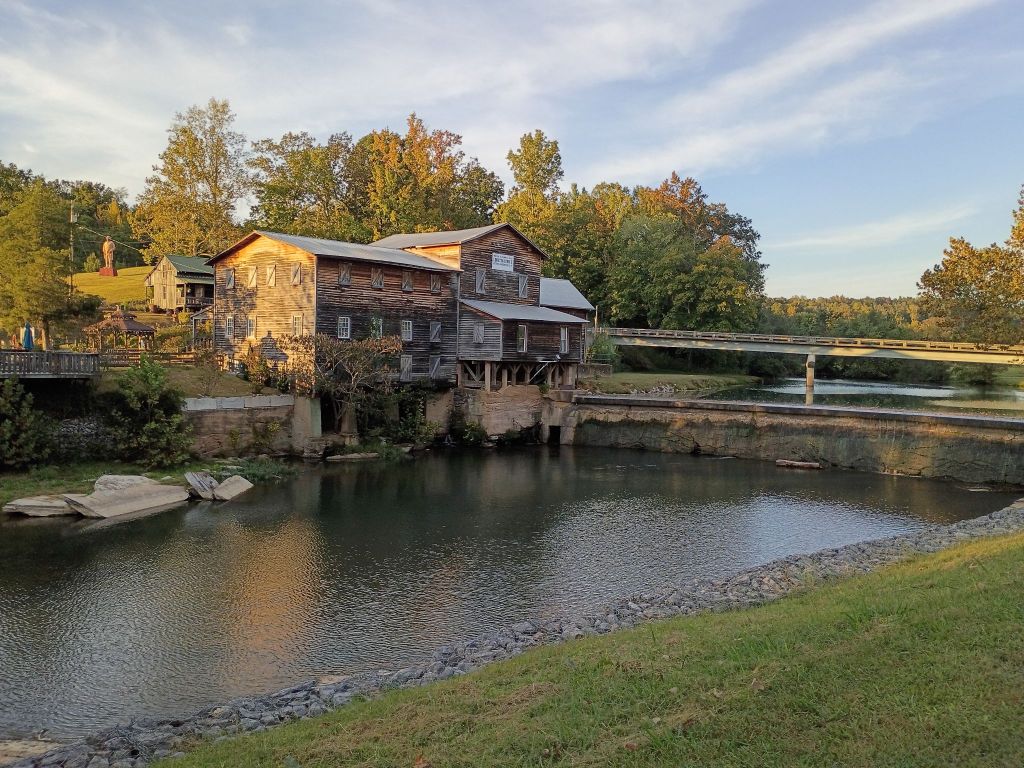
There was the water, the old mill, the bridge, trees reflected in the fading evening light, and great slabs of exposed rock along the stream.
So, naturally, I stopped.
I took pictures.
And then Professor Headquarters and I started doing what we seem to do more and more often.
We started reading the landscape.
The first question was simple:
Why is the mill THERE?
Not, “Why did somebody build a mill?”
Why did somebody choose that particular spot?
Stand with me. Imagine this.
Forget the road for a moment. Forget the modern buildings. Forget the bridge. Forget Loretta Lynn’s Ranch.
Now go backward in time.
There is a stream moving through the landscape. There is rock beneath it. There are changes in elevation. Water is following gravity, as water has a habit of doing.
And somebody stood there a very long time ago and saw more than a pretty stream.
They saw energy.
That was the beginning of our lesson.
Water higher upstream possesses gravitational potential energy. Give that water a controlled route downward and some of that energy becomes motion. Put a waterwheel in the right place and moving water can turn the wheel. Connect the wheel to machinery and suddenly the landscape is doing work.
Elevation.
Water.
Motion.
Wheel.
Mill.
But then another question appeared.
If you need a dam to create or maintain enough difference in water level—enough “head”—how do you BUILD the dam?
The stream doesn’t politely stop flowing while you work.
That question delighted me.
One hundred years ago, somebody couldn’t simply announce, “We’ll finish this next summer,” and leave a half-built structure sitting in moving water. The temporary work had to survive long enough for the permanent work to be built.
Maybe they worked during low water.
Maybe they diverted part of the stream.
Maybe they used temporary barriers—cofferdams—to isolate a work area while the water continued around them.
And then came another question.
How did they know how strong the dam had to be?
Water pressure increases with depth. A dam has to resist sliding and overturning. Its foundation matters. Water can undermine it. A flood can go over it or around it. The very water you’re trying to control is constantly looking for another route.
I began imagining the people who built these structures.
They didn’t necessarily have our modern equations, computer models or surveying equipment.
But they had accumulated knowledge.
They had people who knew water.
People who knew timber.
People who knew stone.
People who had seen what survived and, perhaps more importantly, what failed.
And suddenly that old mill wasn’t simply a picturesque building beside a stream anymore.
It was a problem somebody solved.
That’s when I realized something else.
I don’t yet know the history of THIS mill.
We have been reasoning from physics, geology and what I could see in the landscape. Those are hypotheses—not the historical record.
So tonight we’re going looking for the evidence.
When was this mill built?
Who built it?
What did the original dam look like?
How was water actually brought to the wheel?
How much of what I see today is original, and how much came later?
And here’s the question I’m most curious about:
Did the people who chose this location see the same clues in the landscape that we’re seeing now?
I don’t know yet.
And I love saying that.
“I don’t know” isn’t the end of a scientific investigation.
Very often, it’s the beginning.
Years ago, when I worked with geologists, I was once sent into the field to help measure the flow of water.
Our sophisticated scientific instrument?
A cork.
We measured a known distance, timed the cork as it traveled downstream, and used that information as part of estimating the flow.
Many waxing and waning gibbous moons ago, apparently, I was already learning the same lesson.
Watch the water.
Ask what it’s doing.
Ask why.
A rock.
A stream.
An old mill.
A dam.
A cork.
And one person standing beside them asking:
What happened here?
Tonight I’ll start looking for the historical answers.
But I’m beginning to understand that finding the answer isn’t always my favorite part.
Sometimes my favorite part is the moment when an ordinary landscape stops being ordinary because I finally thought to ask the question.
We’re starting to read it.
— Springer’s Journey
Polished with help from ChatGPT, who has learned that when I say, “Professor, I have one question,” nobody should make plans for the next seven hours.


Leave a Reply